I love talking about the weather. It is the easiest way to initiate a conversation with a stranger or acquaintance if you need to break the silence. Great for elevator rides, spontaneous waiting times and warm repartee.
It is also a ubiquitous element that can have multiple impacts on our lives. Indeed a rainy day, bright sun, or a snowstorm will change how we dress, the meals we eat, the activities we plan and perhaps how we get to work. Personally, I check the weather every morning because I take my bike to work–even in winter.
Moreover, I find weather phenomena fascinating. Tsunamis, earthquakes, tornadoes, nature has a way of reminding us who is really in control. Beautiful, powerful, terrifying the planet is a person. She breathes, she aches and she speaks. Are we listening?
This particular discussion lesson goes from general, to scientific to silly. The objective is to elicit the vocabulary around a familiar topic and add a level of complexity to either the science behind weather or weather-related expressions. I just couldn’t choose, so I put everything.
Pre discussion
- What are the different types of weather or climates you can name?
- What affects the weather?
- How does the weather make you feel? When it rains, when it is sunny when the snow falls…
- How do you use the weather forecast?
- What activities do you do in spring, summer, fall and winter?
- What are the seasons like in your country?
Option 1: The Video: The Science of Weather

- Divide the video into 2 or 3 segments and do a Tell Back of the main themes and words
- How do meteorologists sort through information, identify trends, and make predictions?
- Why do they often get it wrong?
- Why is it important to predict the weather?
Option 2: Weather idioms
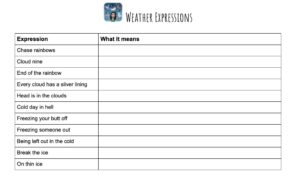
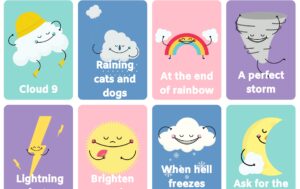
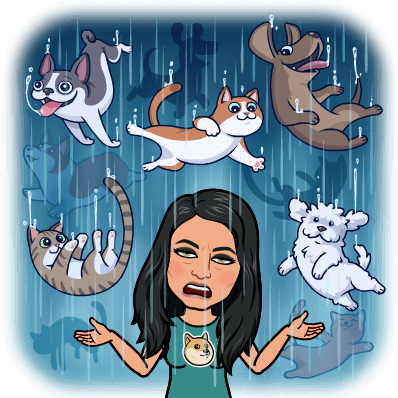
Why do we say it’s raining cats and dogs? Or when we are happy, we say we are on cloud 9? Dig into these idioms with your students and compare if they have some strange weather-related expressions. I know we have a lot.
Check them out with this handout I put on Teacher Pay Teachers. There is a vocabulary grid and flash cards. You can get one or the other or both and let your students figure out the hidden meaning behind these wild expressions.
T