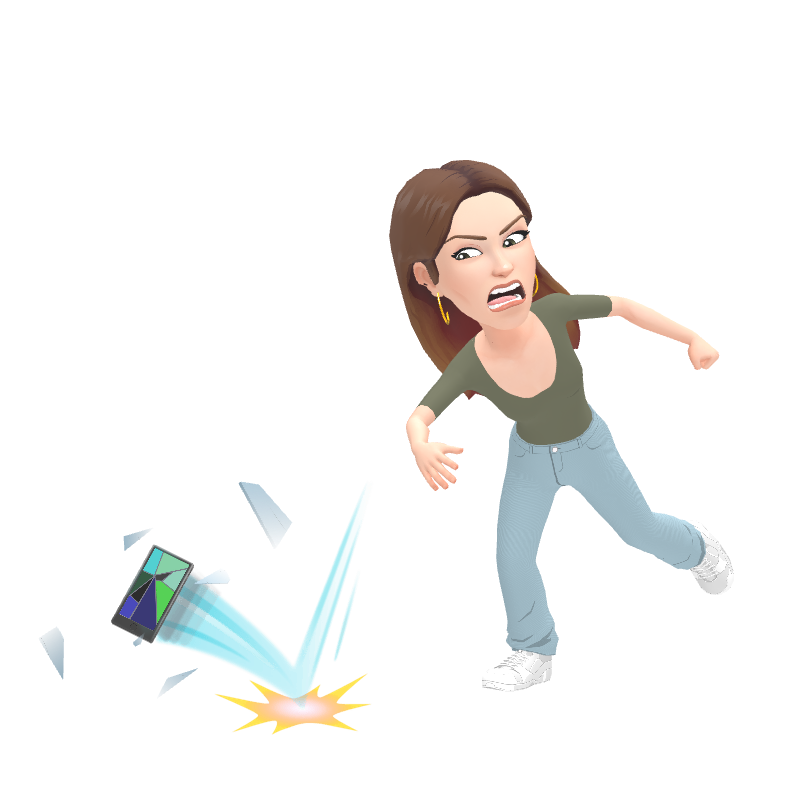
What is the worst or best rage bait you’ve encountered?

“A woman’s place is in the home”

“Immigrants should go back to their country”

“No doesn’t always mean no”

Did I trigger you? Do you want to tell me? Well then my rage bait trap worked. Rage bait is internet slang for when someone says something (usually online) in hopes of getting a reaction out of people. If you were to be scrolling through your phone and see a random video of someone saying something you absolutely disagree with, you might be tempted to leave a comment expressing your anger, however if you do, you are contributing to something much bigger than you think. 

The judgmental monster in all of us

Rage bait use a very powerful human trigger: judgement.  But by leaving a comment, the algorithm behind the post makes it more popular, thus suggesting it to even more people.  This causes it to be more and more seen and therefore make money. Sometimes people use rage bait as a form of publicity for their own product. For instance,  if you see something on Tiktok that makes you angry, and click on the creator you might see a link to a website trying to sell you something, this is one of the ways that indicate it is probably a scam.

A dark truth lurks

Unfortunately, among those who use rage bait for attention and money, there are some people who actually believe these ideas no matter how extreme.  Can you tell what is real and what is not? I can’t.

Alpha, Red Pill, Conservatism

Among the more debated points of view are those belonging to the rising conservatism voices.  One of the more disturbing trends is the Red Pill content that is gaining popularity among young boys. Seemingly an easy rage bait tactic–a thread dedicated to creating “safe space” where contributors vent their misogynistic grievances–it is also creating wide group of people who are inspired by it.

This scheme, used to make a small impact on your wallet, is making a much bigger impact on society and the next generation–a ripple effect that could impact the future more than you think.  What will happen if the young kids, responsible for building the future, head out into the world with a mindset that was spawned from anger and hatred? 

Discussion Questions

  • Have you seen or experienced rage bait?
  • What was your reaction? (see vocabulary below)
  • Now that you know about the algorithm, what will you do now?
  • How do you think rage bait effects younger audiences?
  • How can we protect them from it?
  • If rage baiters are really just trying to make money, is it really so bad?
  • Would you ever consider doing rage bait to earn some extra cash?

Vocabulary

Here is a list of words and expressions to help you express your opinions:

Critical:

Manipulative – This seems manipulative

Deceptive – The person is very deceptive

ExaggeratedThey exaggerated the situation.

Out of contextThat quote is taken out of context.

One-sidedIt’s a very one-sided argument.

UnverifiedThey shared unverified information.

Neutral

Not worth my timeI’m not going to argue about that.

Ignore itI just ignore that stuff.

Scroll pastI usually scroll past posts like that.

Let it goJust let it go.

Angry

infuriatingThat post is infuriating!

OutrageousWhat an outrageous claim.

DisgustingThat’s just disgusting.

I can’t believe thisI can’t believe people fall for this.

So unfairThis is so unfair.

They crossed the lineThat really crossed the line.

Surprised

ShockingThat video is shocking.

UnbelievableUnbelievable!

RidiculousThis is ridiculous.

Over the topIt’s way over the top.

Mind-blowingThat’s mind-blowing, in a bad way.

Are you media literate?

Are you media literate? When we hear the word literacy, generally our thoughts go to reading. But the idea of literacy encapsulates many different skills that we are now extending to many different areas.  For example, you can have financial literacy, digital literacy, ethical literacy, computational literacy and yes media literacy (and the list goes on).

Essentially, when you have reached a level of proficiency in an area where you are able to decode, analyse, see patterns, and spot errors, you have become literate in that area. The trend to view literacy as skill that extends beyond reading is a fairly recent one. Not so long ago, before the web took off, the flow of information would generally come from what was deemed reliable sources. We got your history lesson from a history teacher and our news from a trusted news sources. We didn’t really have to question or doubt (perhaps we should have).

But now that information can come from anywhere, it has become increasingly important to be critical and analytical. In other words, we all have to have the instincts of an expert. Radio personality Jay Smooth has  created a great YouTube series on probably the most important of the literacies: media literacy. See if you can scoop up some of the ideas he exposes and make a list of the tips he shares.

Pre discussion

Let’s play the good and bad game…go through the list of words and say whether they are good or bad:

  • Consuming media
  • Influence of media
  • Mass communication
  • Social media
  • Navigate media

The video: Introduction to Media Literacy by Jay Smooth

Smooth speaks very fast, and he goes very deep into ‘sociology speak’ so if you are working with lower intermediate students, I suggest you adjust the settings on YouTube to make the video slower and show the subtitles.

Also, I would stop the video at about 2 min (just after the definition of media literacy).

Doing this video requires a little teacher bravery, it’s fast and complex–but it’s also adult, current and intelligent. Remind your participants that the idea is to simply come away with the general concept, that they can deduce from context and perhaps try to recognize one or two new words.

  • What is media? Make a list
  • What is the difference between messages and effects?
  • Go to 5:25 of the video, watch the texting example.
  • Do you use emojis in your emails and texts? Do you have some signature emojis?
  • Have you ever sent a message that was mis-interpreted?

This is a vocabulary dense lesson, but it is true to native speaking. I believe it is important to expose students to this so they can develop skills and tricks for when this happens to them in real life. But like I said, it takes a little teacher bravery…let me know how it goes. 


How do you separate fact from fiction?

Fake news is the term “du jour.” How sharp do you think you are at spotting fake news?

What if you were a journalist? If your livelihood depended on your ability to detect fact from fiction? In Markham Nolan’s TED talk “How to separate fact from fiction online” we see how the digital dimension affects this decision.

WarmUp

  • How good are you at detecting fake news?
  • What is your criteria? How can you tell?
  • Do a Mind Map of the elements/criteria that can help separate fact from fiction.

The video: TED Markham Nolan: How to separate fact from fiction

  • Watch the video and gather some of Nolan’s debunking tools.
  • Compare your list with the mind map you did previously.
  • What elements in the digital information era make fact checking easier? What makes them harder?
  • Which anecdotes in Nolan’s talk stick with you? Why?
0
0
2
0
2