Question of the day

What body language should you avoid?

  • Media: article
  • Language focus: body, should and shouldn’t (modals), emotions

When you speak, do you think of your body language? Or when you listen, do you think of what your face looks like to the person who is talking? If you are a parent, ever wonder why you have to repeat the same things over and over again? When you are barking out orders to your children or spouse, how do you think your tone sounds? I know mine isn’t terribly warm– especially when I get to the fifth time.

7-38-55

Some say that 90% of communication lies outside of the message. Similarly, Albert Mehrabian slices the communication elements even more precisely with his 7-38-55 rule. Mehrabian says that only 7% of the message is the actual spoken words. The rest of our focus is given to tone of voice (38%) and body language (55%). Whether or not this is actually true is debated among professionals, but it seems fairly reasonable to think that a big part of our message lies in our demeanour as well as in our message.

My Head Wants to Explode

If it is too much for you to think about your body, your tone and your message all at once you are definitely not alone. In fact, I would argue that concentrating too much on body and voice cues might even make you look fake or inauthentic.

Conversely, I’m sure you have encountered nervous ticks, condescending tones and slouchy postures in others that make it difficult to concentrate on what the person is saying. Therefore, it is fair to think that investing a little “brain juice” toward your outward appearance and tone may have its benefits even if at first it feels unnatural.

This article points out what the author claims to be some of the “worst” body language mistakes professionals make. Again, whether it is true or not is debatable. Nonetheless, I think it’s worth a read and a discussion.

Lesson Notes

Handout on TPT for 0.99$

As per the Whole Language Approach, this article is for a first language audience. It should be fine for high intermediate students, but if you attempt it with lower levels, you can use the handout to explore some of the key concepts..

The 11 Worst Body Language Mistakes Professionals Make

An interesting article to get you talking about non-verbal language.

Discussion Questions

  • Do you do any of these?
  • What body language bothers you?
  • What are some of the things people do that inspire trust?
  • What are some of the things people do that inspire distrust?

For more on this topic see Body Language and the Brain 

Can you live a zero-waste life?

  • Level: A2, B1, B2
  • Discussion questions: in the post
  • Media: Video
  • Language focus: environment, action verbs, household items

Can you live a zero-waste life? I know I can’t…not yet anyway. But every year I try to incorporate a new environmentally friendly practice. For example, I switched my paper napkins for cloth napkins. I also buy at least 10% of my clothes at second hand shops. Also, I collect and bring all my styrofoam to a community drop off point.

It may not be a huge contribution to reducing my environmental footprint, but it’s something. I know we should and could be doing so much more. And I know that the degradation of our planet is alarming and overwhelming. But I also have to take care of my emotional well being. Thus, carrying the responsibility of saving the planet is pretty heavy. I try to not be too hard on myself about doing more and I try not to judge what everyone else is doing.

That said, I do like to hear what other people are doing to reduce waste and be better global citizens. Sometimes, there are practical things. Things that are not drastic or super time-consuming. Sometimes all I need are some ideas. Here is where Lauren Singer’s TED talk comes in handy.

Singer is an absolute champion at transforming her daily habits into zero waste practices. You heard that right…she produces no garbage at all. How does she do it? You’ll have to listen to her talk to find out.

Warm-up

  • What do you do to reduce waste?
  • What would you like to do, but feel that it is too much energy or too time-consuming?

The Talk: Why I live a zero-waste life by Lauren Singer

Discussion Questions

  • What inspired Singer to lead a zero-waste life?
  • Make a list of all the things Singer does to eliminate waste
  • What are some of the things Singer does that you could do?
  • What are some of things Singer does that you find too time consuming or complicated?
  • Do you think we are doing enough to reduce our environmental footprint?
  • What are some of the more important things we could do to reduce waste?

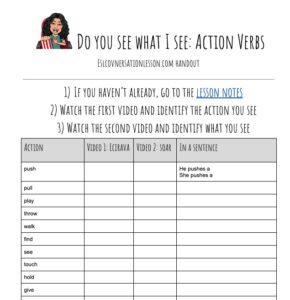
Do you see what I see?

  • Level: A1, A2, B1, B2
  • Handout: on TPT
  • Media: Video
  • Language focus: action verbs, causal linking words

Do you like independent films? I think it’s a good habit to break away from mainstream films and explore some of the messages in indie films. Often I find myself conditioned by an expectation of a happy ending. I even find myself expecting it in my life. When it doesn’t it feels odd.

Movies Shape our Psyche

Does the dedicated athlete always take home the gold? Does the couple always live happily ever after? Does the cancer fighter always beat the sickness? Does the lost dog always find its way home? In movies, often yes, but in real life not so much. Do you think we feel more cheated of these defeats because we have developed a distortion of reality?

The Eye of the Beholder

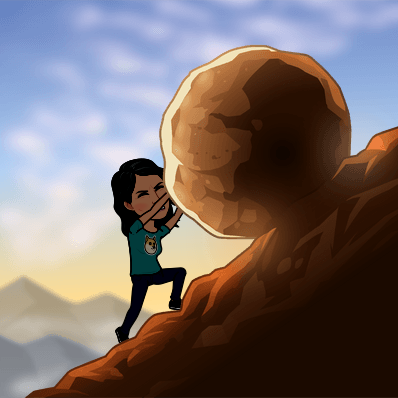
Here are a couple of short thought-provoking wordless animations that you can use to elicit some discussion. You can start by identifying all the action verbs. When I taught it, students saw different things. It was rather personal. 

Then, if your students like introspective analysis, there is an opportunity to talk about the symbolism in the videos. In my experience, this sort of thing can either prompt a great philosophical discussion or fall flat. It really depends on the people you are working with.

Lesson Notes

Handout on TPT

The films are wordless, so you can use them with basic level students and stick to identifying the action verbs included in the handout. If you are working with a higher level, then you could ask them to note when the actions occur. Or better yet why the character does the action. And for the higher levels, you can go deeper and explore character motivation, how failure can create opportunity and how we cope with hardship. It’s a pretty elastic lesson.

Warm-up

  • Make a Mind Map of all the action verbs you know

ECIRAVA from Daisuke Kaneko on Vimeo.

SOAR: An Animated Short from Alyce Tzue on Vimeo.

Discussion

  • Pretend you have to describe this video to someone who can’t see, make a list of all the actions in this video?
  • What is the problem (s) in this story?
  • What is the difference between one side of the mirror and the other?
  • Which side do you think the man is likely to be happier?
  • What does the main character do to overcome the problems?
  • What are some of the emotions you can identify throughout the video?

How do you poach an egg?

  • Level: A1-A2
  • Handout on TPT
  • Media: Video
  • Language focus: food, verbs, cooking, imperative

How do you poach an egg? Yes, that is my discussion question for today. Easy right? In my humble experience, poaching an egg is one of the harder cooking skills I have ever had to master.

It’s Authentic

But aside from the culinary anecdotes, the mmmEnglish YouTube channel prepares cooking lessons with the goal of teaching English. Now I know it goes against the Whole Language Approach to use adapted materials, but I think this video has got all the authenticity features of first language material and is a great resource for beginner ESL material, of which I don’t have a whole lot.

So if you are looking for an authentic way to teach food words or cooking verbs or just a good listening exercise that focuses on process, this is a short, slow, clear and useful video. Especially if you are trying, as I am, to make the perfect poached egg. Bon appétit!

Teaching Notes

I made a handout to go with the video and put it on Teacher Pay Teachers (0,99$). But if you want to just watch and discuss, you can use the discussion prompts included in this post.

Handout on TPT

Warm UP

Do a quick Mind Map of all the food words your students know. Perhaps you could also prompt a few cooking verbs.

The Video: How to Poach an Egg by mmmEnglish

Discussion Questions

  • What are the ingredients?
  • What tools are needed?
  • What are the steps?
  • Complete these sentences:
    • The water is perfect when it has small________ but it is not boiling.
    • The yoke must be _______but not hard.
    • Toast is just a ________that has be toasted in the ______
    • ______butter on the toast.
  • Make a list of all the cooking verbs. Can you put them in another sentence?
  • Now it’s your turn…think of an easy recipe you could share with the class.

Are you looking for language activities for your kids?

Are you looking for language activities for your kids? Perhaps even an activity that could get them out of your hair for a bit (not judging). In these unprecedented times of social distancing, keeping your kids busy or better yet, engaged is challenging to say the least.

Generally speaking, eslconversation.ca is a site devoted to ESL materials for adults. However, being a mother of young kids myself, I feel compelled to share what I am doing with my own girls.

Because I too worry that they get complacent. I too worry that their brains turn to mush. And I too need a break from being the hourly ringmaster. But there is no way that my conscience will let me plug them into a video game or television. So what do to?

Easy Comic Maker: by Mélanie L. Sisley

If you have other sites or apps, let me know. I would be more than happy to make a video and share it.

What bad habit would you like to break?

Why are bad habits so hard to break?

First, let’s clarify that a bad habit is a negative behaviour pattern–perhaps one that causes bodily harm. So if your daily glass of wine is not causing you harm then it can stay (yay!)? However, if you drink a whole bottle, text old boyfriends/girlfriends or pass out on the sofa, that may be a different story.

Without being too hard on ourselves, I’m sure we can think of at least one bad habit. Mine…I stress eat. When I get stressed, I feel hungry, crave sweets (I don’t even like sweets) and I’m always looking forward to my next meal.

But why?

The creators of ASAP Science YouTube channel look at bad habits from the scientific perspective. They explain why we feel the need to repeat behaviours even when they hurt us. Let this scientific explanation take the guilt out of your bad habits and give you something interesting to talk about with your students.

Pre discussion

  • Mind Map a list of bad habits.
  • What are your bad habits?

The Video: How to Break Your Bad Habit

  • What are some of the bad habits mentioned in the video?
  • How much of our behaviour is done out of habit?
  • Can you explain “chunking”? What does it do for us?
  • Can you name the elements in the 3 step loop?
  • How can you change a habit?
  • Now think of your own bad habit…what do you think it provides for you? (e.g. a rest, socialization, a break from boredom, a break from stress, etc…)

Let me know how the discussions turn out. I love to hear from you.

How are you feeling?

Can you describe what emotions you are experiencing right now? This is the question Tiffany Watt Smith asks her TED audience to sensitize them on how easy or how hard it is to put words on our emotions. This is a fantastic presentation to conjure the vocabulary of emotions and an esl psychology lesson.

Do you think words can really describe how we feel? If you watched the movie Inside Out, or are knowledgeable about the scientific litterature on emotions, you may have heard that emotions have been broken down into 6 basic forms: anger, fear, disgust, happiness, sadness and surprise. The first time I read this, I found it hugely oversimplified. I just couldn’t relate my own personal experience with this.  Yet, these basic emotions seem to be the baseline for emotional researchers.

Smith challenges this simple view of emotional language. She looks across different languages and cultures to show the complexity and diversity of the words used to describe how we are feeling. She even suggests that the very existence of these words may allow us to feel things that people in other cultures don’t. She exposes a compelling and thought provoking-idea that words can shape how we feel. Before you start, be sure to download the Google docs included in this post. It has a preliminary list of emotions vocabulary words.

Warm-up

  • What emotion words do you know?
  • Do you think you are good at talking about how you feel?

The Video: TED The History of Human Emotion Discussion by Tiffany Watt Smith

I would break this presentation down into a series of snippets and begin by doing Tell Backs of each segment.  In fact, if you have more basic students, I would stop at the 6 min mark and center a discussion on the vocabulary of emotions. However, for more advanced learners, I would go through the presentation as it digs much deeper into the topic of the history of emotions and maybe very engaging for higher-level discussions.


Questions 

  • What emotions does Smith talk about?
  • Can you give some examples of the emotional language of other cultures?
  • What stuck with you in Smith’s presentation?
  • Do you have words in your native language that describe feelings that don’t exist in English?
  • How are emotions viewed in your culture? Do you talk about them, or not?
  • What, according to you, is emotional intelligence?
  • Use the emotional definer wheel and say which are positive and which are negative

Want to download this lesson?

Get the Google Docs version for free

What movie do you want to see?

Feel like going to the movies? As art imitates life, movies are a great way to take you out of your reality and plunge you into someone else’s. Let’s go take a look at the Rotten Tomatoes reviews to see what picks our fancy.

The site features both trailers and written reviews. It’s up to you how you want to fuel the vocabulary for this lesson.

Pre discussion 

  • What are some of your favourite movies?
  • What genre do you like most?

The site: Rotten Tomatoes 

Discussion Questions

  • Scan the titles and have participants pick one and say why (other than “it looks interesting”)
  • Go to the description, at the bottom, and do a quick Tell Back of the summary, pulling out key vocabulary.
  • Watch the trailer. Make a list of actions you see.
  • Describe the characters. What makes them interesting.

Do you want to climb a mountain?

I am an amateur rock climber…very amateur. It’s not for everyone, I know. But what is interesting about rock climbing is it puts you smack in the middle of a discussion between your “afraid-self” and your “courageous-self”.  Alex Honnold, famed for climbing Yosemite’s El Capitan without ropes, candidly talks about this discussion and how he talked his “afraid-self” into trusting his abilities.

Is fear always something to conquer?

There is a fine line between fear as the voice of a wise consultant and the voice of an insecure mother. In other words, sometimes fear is something you should conquer and sometimes it’s something you should heed.  Sadly, some fantastic athletes have died by choosing wrong.

Alex Honnold the Humble Hero

I am sharing this TED talk more because I am fascinated by Honnold’s composure, discipline and wisdom. What’s more, I think his experience creates an interesting context for a very different type of discussion about fear.

Pre discussion

  • Have you ever done anything that made you afraid?
  • How did you overcome your fear?
  • What are risks worth taking?

The Video: TED with Alex Honnold

  • What are all the elements that Honnold does to prepare for this feat (do a Mind Map)?
  • What did he do to overcome his fears?
  • Why was he not satisfied after he completed his climb?
  • What are the elements that go into “mastery”?
  • Do you master anything?

What have I learned from soap operas?

What have I learned from soap operas? Honestly, nothing. Except, there was one particularly boring summer, I was a teenager, no friends close by, and no motivation to get off the basement sofa. I got sucked into the soap opera vortex. There I learnt that I could spend an entire summer on a 5-foot sofa. I was addicted to the brain-numbing entertainment–the very thing I warn my children against. The whole summer…in the basement…me, the cycling, camping, hiking outdoor enthusiast that I am. Yep, that was one teenage phase that I am not really proud of.

Beyond the frivolous entertainment

But Kate Adams, assistant casting director at the Emmy-winning soap opera “As the World Turns,” puts a different spin on things. Funny, thought-provoking and vulnerable, she relates some of the crazier themes in soaps to her own life. In fact, I felt rather touched by her story (and a little less judgmental of my summer in the basement).

Give us something to talk about

Whether you are or were a soap opera aficionado, Adams’ “life lessons” will give you an interesting angle to reflect and discuss how these lessons could relate to your life. Warning: I don’t think your students will understand the references Adams makes. Still, I’m sure they will get the gist of the lessons and may even have some soap opera/telenovela memories of their own to share. You may even be surprised to find that many of us had a “soap opera” phase in our lives.

I made a handout for the lesson on TPT for $0.99 (teachers pay teachers), but I have also put the main discussion questions in this post.

Warm-up

  • Do you follow some sort of soap opera or series on television?
  • What do you like about it?

The video: Kate Adams 4 Larger than Life Lessons from Soap Operas

Discussion Questions

  • What are the 4 lessons?
  • Which of Kate Adams’ lessons do you think is the most important? Why?
  • What are some of the life lessons you carry with you when times get tough?
  • Do you have any life stories that show how you applied these lessons?

Oh…and this is too fun not to share: soap operas from around the world.

0
0
1
0
0